

Time to Stop Being ‘Green’ about Green Issues
Lucy Beney
Introduction
Amid the growing number of mental health ‘diagnoses’, a new climate-related condition is attracting increasing attention. The membership bodies representing the psychological professions report that ‘eco-anxiety’ is “impacting a growing number of individuals”. Young people are particularly at risk, with no fewer than 73% reporting that this has had a negative impact on their health and wellbeing, according to the British Association for Counselling and Psychotherapy (BACP).[1]
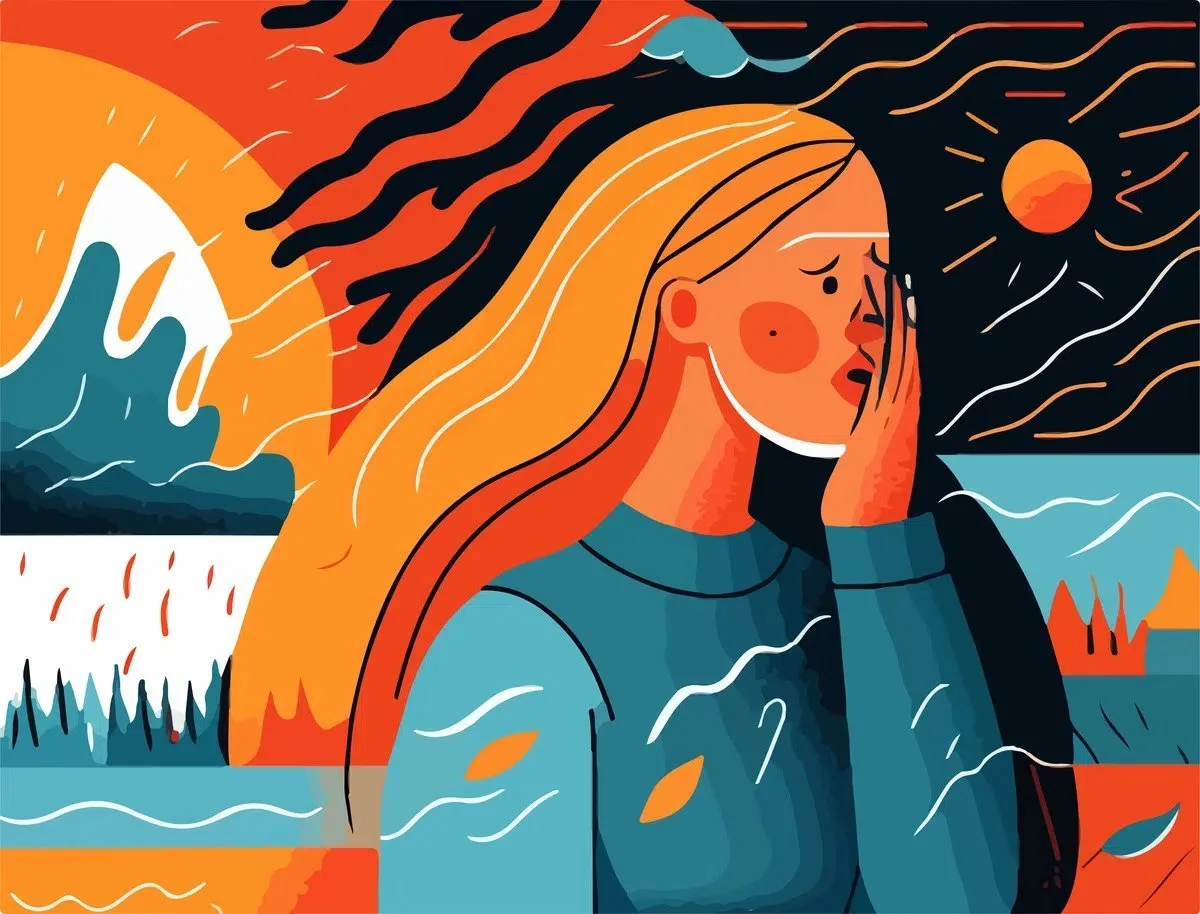
If this is the case, we cannot be surprised. Today’s young people have been submerged in a tsunami of horror stories about ‘the climate emergency’ throughout their entire lives. Alarmist language has become part of the everyday lexicon, while images of fire and flood abound – consistently archetypal symbols for apocalypse, across many different cultures. There is almost something Biblical about it – the end of the world is nigh, but without any hope of grace, redemption or renewal.
Schools unremittingly disseminate this message. Even Netflix’s now-famous fictional drama Adolescence depicted an ‘eco’ corner in the chaotic school scenes, for added realism. “Unless countries dramatically scale up their efforts to counter the climate crisis, the world faces a global catastrophe”, UN Secretary-General António Guterres warned, in 2022.[2]
The focus everywhere is almost entirely on impending disaster, and a call to the activism deemed necessary to persuade (or force) individuals and institutions to change their ways. There is little reference to hope, and the celebration of human ingenuity and achievement.
There is an alarming lack of context given to our current situation, and a lack of reality in the current narrative. This is not, however, discouraging “a growing number of climate and ecology-oriented therapists, coaches and psychologists” from striding, with faux certainty, into this arena.[3]
Therapists as Activists
Traditionally, therapists focussed on the personal difficulties of the people with whom they worked. They listened to their backstories and explored their experiences, so that each one could find a better way forward within their individual circumstances. Practitioners offered a safe, neutral space in which all-comers could discuss their concerns. It was free of judgement, but not of challenge; and it was supportive, but not necessarily ‘affirmative’ of the other’s beliefs.
Recently, however, the British Association for Behavioural and Cognitive Psychotherapies (BABCP) published a guide to “changing the climate conversation”.[4] This illustrates very clearly the wider shift within the profession from neutrality and detachment towards ideological activism – and even collusion – with those whom we should be helping.
This matters, because the BABCP promotes itself as “the leading organisation for CBT [Cognitive Behavioural Therapy] in the UK and Ireland”. The organisation has built a reputation through offering well-researched, evidence-based psychological interventions, not ‘indigenous wisdom’, environmental activism or critiques of neoliberalism.
The publication, however, reads more like a manifesto than a useful therapeutic tool. It speaks openly of "fostering social activism”, something which should never be part of therapy, especially with children and young people, whose understanding of complex geo-political issues and whose ability to give informed consent is, by definition, limited.
Forget the personal, the political now takes precedence. Advice is offered on how to pose “exploratory questions” to those who appear ambivalent or may be “in denial”.
After all, “avoidance and non-acceptance of mounting evidence leads to cognitive dissonance and further efforts such as seeking out of alternative information or perspectives that appear to justify denial or inaction”.
There is also a new emphasis on practitioners’ own concerns, and how these might play out in the therapeutic space. The idea that "therapists themselves need to be prepared to receive the emotional load such discussions may hold" when someone presents with ‘eco-anxiety’ is an extraordinary statement. Historically, therapists have been trained to ‘hold’ any emotions a client may bring. That is one reason why people come to therapy, rather than off-loading their feelings on friends and relatives. It is also why practitioners in the psychological field have regular supervision. It is certainly not the job of a therapist to share “personal hopelessness", especially with children.
Recently, a supervisor of trainee counsellors reported that the students had been advised to add “harm to the environment” to the statutory “harm to self and others” as reasons for breaking confidentiality in their contracting with clients. As a colleague drily noted, “I suppose we now need to police people’s recycling too”.
Ignorance and Arrogance
Much of the material relating to climate activism is deliberately – and irresponsibly – emotionally charged and gives only a partial picture. Information published to guide psychological professionals is no exception. The ignorance and arrogance are breath-taking.
The BABCP document refers to “stopping carbon emissions and protecting life on earth” – with no acknowledgement that human beings and animals emit carbon dioxide all day every day, and vegetation relies on carbon emissions to thrive.
It declares that “ever since the Renaissance, Western civilisation with its dizzying triumphs of science and technology, have [sic] driven us up a blind alley”. This is effectively suggesting that we would be better off with the limited horizons, insecurity, poverty, death and disease of the late Medieval world, rather than enjoying the stability and prosperity wrought by progress, which have left more people healthier and wealthier than ever before.
“If we are to adapt, maybe even survive…” appears in one sentence, the clear implication being that we might not survive. Why is there no mention of the fact that human beings are the most versatile and ingenious species on the planet? This is why we have survived and thrived in the way that we have – even through previous eras of climate change, to name but one challenge.
On the Ground
So, what is actually going on with children and young people? Those statistics above don’t somehow ring true for me. When questioned, young people now know that they “should report feeling despair". However, this ‘catastrophising’ is very much something pushed by adults on to children.
Like so many recent developments in the world of therapy, it also demonstrates an astonishing lack of understanding of child development. Children live in the moment. Teenagers – notoriously self-absorbed – are more likely to be preoccupied with their own concerns. If some young people are living in a state of high anxiety about the environment, that is because adults – quite inexcusably – are stoking that fear.
I have spent thousands of hours counselling children and young people, and only two or three have reported feeling any sort of ‘eco-anxiety’. The adolescent world is invariably ‘me’ centred. It is the time when young people play and perform, and experiment with different identities and ways of being in the world. It is a period which adults should both respect and protect – and infuse with hope and optimism.
Reality versus Fantasy
It is also worthwhile noting that climate alarmism is being fostered among young people who are further removed from the natural world than ever before. Many spend hours alone and online in their bedrooms, experiencing life almost entirely mediated through a screen. For others, the world has proved to be a frightening and unpredictable place, and they have retreated indoors.
R R Reno recently explained this beautifully. “We’ve lost touch with reality”, he writes. “Technology is certainly a factor. A few years ago, people on airplanes began pulling down the window shades. The world outside, alive with light, interferes with the screens that have become the focus of our attention. The darkened airplane cabins epitomize much of our existence these days. We’re cocooned in a shell of technology”.[5]
The further removed from nature we are, the less we understand the reality of our lives as part of a complex eco-system, and the natural cycle of life. It is then harder to have a balanced perspective. We fear what we don’t understand.
The clarion call to protect the natural world has also increased in parallel with a decidedly unnatural clamour for artificial intervention in human affairs. Drug residues and artificial hormones – from the contraceptive pill, abortifacients and hormone replacement therapy – contaminate water courses. Even the Green Party, primary promoters of the ‘climate emergency’, endorses the use of these compounds for so-called ‘gender affirming care’ – buying into the dystopian fantasy of individuals being ‘born in the wrong body’.
Culture becomes more disposable by the day, with fast food and fast fashion. We see no need, any longer, to give thanks communally each autumn for the bounty of the earth, which will see us through another winter. More of us than ever before live alone and our families fracture, requiring increased resources. We adorn our bodies with tattoos, hair dye, cosmetic fillers and ‘gel’ nails. During the Covid pandemic, we couldn’t get enough of single-use plastics.
The desire for novelty means the average life of a mobile phone is around two years. Very few people give a thought to the vast power-guzzling data centres which are needed to provide almost every service on which we rely. Every day, containers of plastic ephemera arrive in our ports, conveyed by ships which add significantly to air pollution, to fill the shelves of our shops for each and every festival – and protest march – we can conjure up. Our young people are often the first at the check-out.
Our hypocrisy betrays our real concerns.
The Back Story
In truth, human beings have always lived with ‘eco-anxiety’, albeit of a rather different kind. In much of the world, for most of human history, the environment has been the enemy. The forces of nature were something with which to battle, and to subdue. Since we started farming, our survival has depended on the climate and conditions being benign enough to ensure a good harvest.
As recently as the nineteenth century, adverse weather conditions could mean ruin and starvation. In his novels, Victorian writer Thomas Hardy evokes the care and concern taken to ensure that the crops were “safely gathered in” each year, and how much was at stake if the weather was misjudged.[6]
In Far from the Madding Crowd, fearing an approaching storm, protagonist Gabriel Oak gazed “with misgiving at eight naked and unprotected ricks, massive and heavy with the rich produce of one half the farm for that year”. He is aware that this represents “seven hundred and fifty pounds in the divinest form that money can wear – that of necessary food for man and beast”.[7]
The ability to build shelter and secure a supply of food has played an essential role in patterns of human migration and settlement. The early settlers in what are now the United States of America arrived during the Little Ice Age and fought for survival during their first few winters. Over half their number died. Meanwhile, further south and a hundred years earlier, Amerigo Vespucci surveyed the tropical abundance of the south eastern coast of what is now Brazil, and reported that “if there is a terrestrial paradise in the world, it cannot be far from here”.[8] The environment mattered primarily as the means of human sustenance.
Despite the assertions of the BABCP, until the industrial revolution, and indeed for some time afterwards, the vast majority of human beings lived precariously on the land, subject to the whims of nature. While the United Kingdom was the first country to achieve a majority urban population, as early as 1851, according to the United Nations, it took until 2007 for a majority of the global population as a whole to move to the great cities of the world. For most, this promised increased security and prosperity.
However, as we have rushed to the cities, embraced urbanisation and removed ourselves further and further from the natural world, this strange phenomenon has occurred. Even as we enjoy the all the benefits of modern living, this extraordinary form of climate alarmism has crept into all aspects of life, including the therapy room.
Conclusion
Perhaps the most important point to make is that climate change is real – and it has always been a feature of this planet. During the last Ice Age, we could have walked to continental Europe from southern England across a land bridge, as sea levels fell. Thousands of years later, the climate of southern England was sub-tropical. This time there may be an anthropogenic element to it – but we don’t actually know. Whatever the cause, our chances of stopping it are nil. As before, we shall have to adapt, and human beings are pretty good at that. If that was not the case, as a species we would have died out a long time ago.
Desirable as ‘clean’ sources of energy and production may be, we have to accept that the entire modern world is built on the availability of hydrocarbons. If we did indeed, ‘just stop oil’ tomorrow, civilisation as we know it would come to a grinding halt very quickly. In his very timely book, How the World Really Works, Professor Vaclav Smil outlines how “the increasing dependence on fossil fuels is the most important factor in explaining the advances of modern civilisation”.[9] Even the roll-out of green technologies currently requires fossil fuels in large quantities.
Former Bank of England economist Neil Record, writing in The Daily Telegraph, put it rather more bluntly: six billion of us would die within a year, if all use of fossil fuels stopped immediately. “Only isolated rural communities, agriculturally self-sufficient, would be relatively unaffected”, he tells us – at least until marauding city dwellers, desperate for food, turned up in large numbers to help themselves. He writes, “accessing food and safe water for urban dwellers (about 55% of the 2023 world population) would be nigh-on impossible, as all the normal distribution routes for food would have failed and storage facilities (chillers/freezers) would also have failed without electricity”.[10] That sounds a great deal more scary – and immediate – than computer projections which may or may not materialise some time in the future.
It is time to be constructive. Children and young people can be empowered to do many things to help improve their environment – not drop litter, switch off lights and devices when they are not in use, avoid "fast fashion” and learn to grow and cook local and seasonal food, just for a start. We can instil a new respect for education – rather than indoctrination – and for the innovators and creators of newer and cleaner technology. We can exercise our own creative talents and resist the automation of everything, and our consequent dependence on power and plastic. We can avoid magnifying feelings of helplessness, which diminish the importance of personal agency and responsibility.
It is the job of adults to ground children in reality and instil hope where we can. It is possible to validate a child's feelings, reminding them that they are not facts – and then guide them in a more positive direction. As adults, we are supposed to take the lead and set an example – especially professionals in positions of responsibility.
[1] Aspey L, Eco and climate anxiety – What therapy can help with, BACP, https://www.bacp.co.uk/about-therapy/what-therapy-can-help-with/eco-and-climate-anxiety/
[2] UN Environmental Programme, https://www.unep.org/news-and-stories/story/world-headed-climate-catastrophe-without-urgent-action-un-secretary-general
[3] Aspey L, Eco and climate anxiety – What therapy can help with, BACP, https://www.bacp.co.uk/about-therapy/what-therapy-can-help-with/eco-and-climate-anxiety/
[4] BABCP, Changing the Climate Conversation: A CBT Approach to addressing the crisis, September 2025,https://babcp.com/babcp-launches-guide-to-aid-cbt-therapists-navigate-eco-distress-and-climate-anxiety/
[5] First Things, Recovering a Christian World, R R Reno,9 January 2026 https://firstthings.com/recovering-a-christian-world/
[6] Come, Ye Thankful People, Come, Henry Alford, 1844.
[7] Hardy T, Far from the Madding Crowd, Thomas Hardy, Penguin Classics, (first published 1874).
[8] Ober, Frederick A, (1907) Heroes of American History: Amerigo Vespucci, Harper and Brothers Publisher, https://www.heritage-history.com/index.php?c=read&author=ober&book=vespucci&story=earth.
[9] Smil V, How The World Really Works – A Scientist’s Guide to Our Past, Present and Future, Penguin, 2022.
[10] Record N, What could happen if we just stopped oil? Six billion might die, Daily Telegraph, 19 December 2023.

Lucy Beney, Save Mental Health’s Correspondent on Child Mental Health.
Lucy, of Thoughtful Therapists is an Integrative Counsellor working in private practice and also a facilitator for the Tuning into Teens parenting programme